
A firearm does not have to be visible to be a threat. It can be concealed in a backpack, stored inside a vehicle, hidden in a locker, or moved through a crowded entry point without drawing attention. That is why many security leaders ask a direct question: can detection dogs find firearms? The answer is yes - but the real value lies in understanding what they are trained to detect, how deployments work, and where K9 screening fits into a broader protection plan.
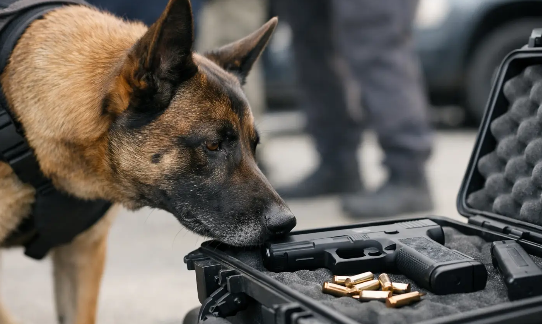
Can Detection Dogs Find Firearms?
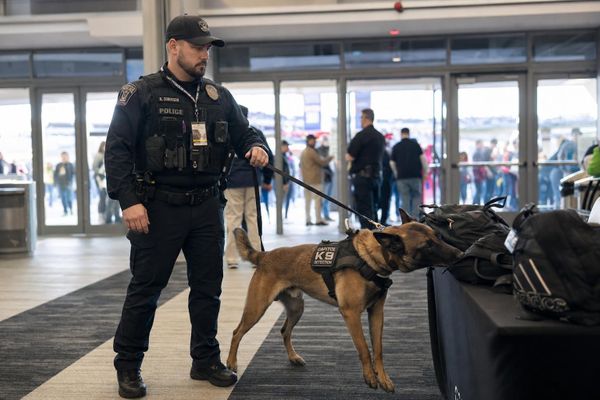
Can detection dogs find firearms in real-world settings?
Yes, properly trained firearm detection dogs can locate firearms and firearm-related odor in operational environments. That includes schools, office buildings, event venues, transit areas, parking garages, residential properties, and open search locations. They are not guessing, and they are not reacting to the shape of a bag or the behavior of a person. They are working from scent.
A trained firearm detection K9 is conditioned to recognize target odors associated with guns and related components. Depending on the training program, that may include spent shell casings, gun oil, explosive residues connected to ammunition, and odor transferred from handled or recently stored firearms. The exact training profile matters. Not every dog is trained on the same odor set, and not every security provider uses the same standards.
That distinction is critical for clients making deployment decisions. If the goal is deterrence and screening, the K9 team needs to be trained for high-traffic searches and controlled public interaction. If the goal is targeted investigation, the deployment may focus on vehicles, packages, rooms, or outdoor areas where a firearm is believed to be hidden.
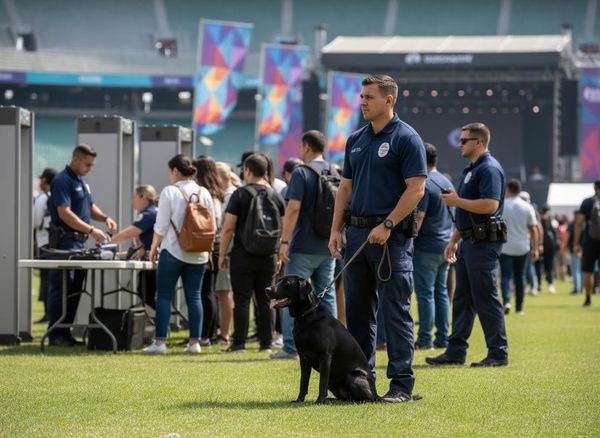
How firearm detection dogs actually work
Dogs detect scent at a level far beyond human capability. In firearm work, the dog is not identifying "a gun" in the abstract. It is identifying specific odor signatures tied to firearm materials or residue. Training teaches the dog to associate those odors with reward, then to perform a clear final response when the odor is found.
That final response is usually passive, such as sitting, staring, or freezing at the source. Passive alerts are especially important in firearm detection because they reduce unnecessary disturbance around a suspicious item or area. In a school, medical facility, executive venue, or government-adjacent environment, that kind of control matters.
The handler matters just as much as the dog. A capable K9 team reads environmental conditions, interprets behavior correctly, manages search patterns, and protects the integrity of the operation. Heat, wind, air circulation, contamination, foot traffic, and recent handling can all affect how scent pools or moves. A disciplined team accounts for those variables instead of oversimplifying the process.
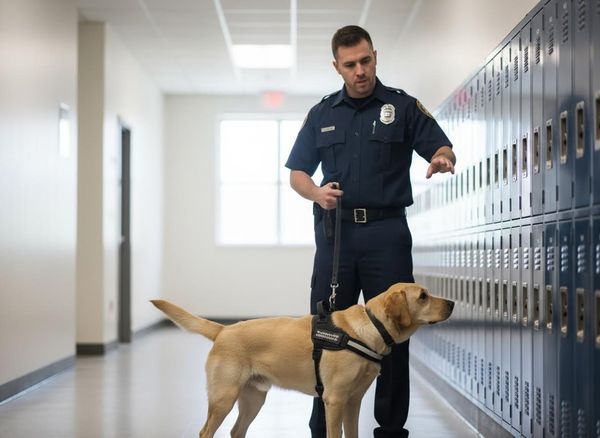
What firearm detection dogs can and cannot do
A serious security plan starts with realistic expectations. Firearm detection dogs are highly effective, but they are not magic and they are not a substitute for trained personnel, access control, or lawful enforcement authority.
They can detect odor associated with firearms and related materials, often even when the weapon is hidden from view. They can search faster than a manual inspection in many settings, and they can do so with less disruption when the operation is organized properly. They also create a visible deterrent effect. In many environments, that presence alone changes behavior and reduces risk.
What they cannot do is identify intent. A K9 alert does not explain why a firearm is present, who placed it there, or whether possession is lawful in that setting. Dogs also cannot guarantee detection under every condition. Packaging, contamination, environmental interference, age of odor, and training scope all affect outcomes. That is why K9 deployment should be part of layered security, not treated as a standalone answer.
Where detection dogs add the most value
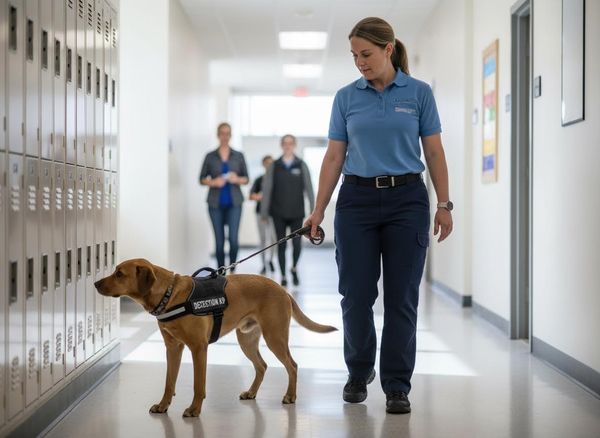
Firearm detection K9s are most valuable where large areas, high traffic, or concealed carry risk make manual screening slower or less practical. Schools and campuses often benefit from periodic sweeps and event-specific screening. Corporate offices may use K9 teams for lobby screening, mailroom checks, parking area searches, or response to a reported threat. Event organizers can deploy them at entrances, backstage areas, VIP routes, and staging zones.
Residential communities and multifamily properties may also have a need, especially after a weapons complaint, repeated trespassing issue, or violence-related incident. In those cases, a K9 team can support targeted search operations with a level of discretion that is difficult to match through random physical inspections alone.
For executive and dignitary protection, firearm detection dogs can be particularly effective during advance work. A venue may appear secure on the surface, yet still present hidden risk in loading zones, meeting spaces, service corridors, or temporary holding areas. A trained K9 team can search those spaces before arrival and support a stronger protective posture without turning the entire site into a visible enforcement action.
Why training standards matter more than the dog breed
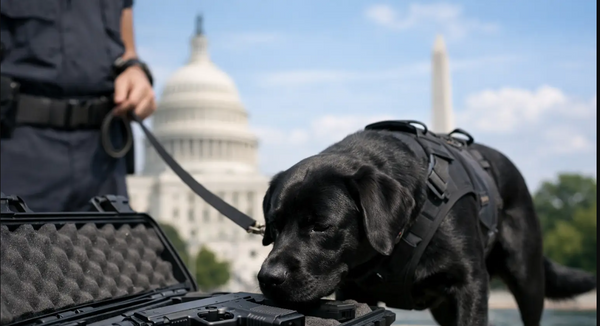
Clients often ask about breed first, but operationally, training and handler performance matter more. A properly selected and certified detection dog must be steady in public, capable of searching under stress, and reliable across varied environments. That includes indoor and outdoor work, noisy settings, vehicle searches, and operations around crowds.
A provider should also be able to explain maintenance training, proofing protocols, certification standards, and deployment limitations. If those answers are vague, that is a concern. Firearm detection is a specialized capability. It requires recurring training, clear odor libraries, documented performance, and handlers who know how to work within legal, operational, and client-specific constraints.
For decision-makers in the Washington, DC region, this becomes even more important in sensitive settings. A school administrator, facility director, or event security lead does not just need a dog on site. They need a team that can operate with command presence, restraint, and legal awareness.

Can detection dogs find firearms during screening at entrances?
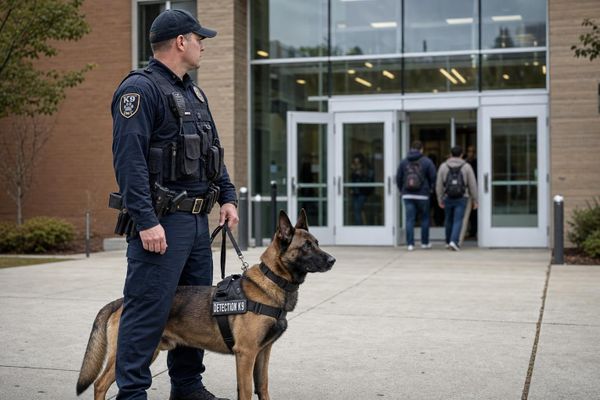
They can, and entrance screening is one of the most practical applications - but success depends on the site plan. A firearm detection dog can work pedestrian entry points, queue lines, bag screening areas, and nearby approach zones. This can improve deterrence and support early interdiction before a weapon moves deeper into a venue.
Still, screening lanes must be designed correctly. If an entrance is overcrowded, poorly spaced, or operating without clear traffic control, the search quality can drop. Handlers need room to work, enough time to observe alerts, and coordination with security personnel who can act appropriately when an alert occurs. If there is no response plan, even a strong K9 deployment loses value.
That is where integrated security matters. A firearm detection dog identifies risk. Security officers, supervisors, and when appropriate, Special Police personnel manage the next step. The transition from detection to action should be calm, lawful, and immediate.
Why organizations use firearm detection K9s now
The answer is not trend-driven. It is operational. Security threats have become less predictable, and many organizations need screening options that are mobile, visible, and adaptable without creating a fortress atmosphere. Metal detectors have a place. Bag checks have a place. Armed personnel have a place. K9 teams add another layer that can search dynamically and cover ground quickly.
They also support proactive security. Instead of waiting for a confrontation, a report, or a visible violation, organizations can use firearm detection dogs to search in advance, monitor elevated-risk periods, and strengthen protective measures around vulnerable people and spaces.
That is one reason providers such as Capitol K9 Detection are used in environments where clients need both specialized K9 capability and a disciplined security presence. For many organizations, that combination is what turns a detection asset into a practical security solution.
The better question is not only whether detection dogs can find firearms. It is whether your site, event, or facility has the right plan to act on what they find - before a concealed threat becomes a public incident.
Partner with Washington D.C.'s Premier Protective Force
Securing vital infrastructure in our nation's capital demands a level of legal precision, tactical experience, and authoritative presence that standard private security firms simply cannot replicate. We invite you to explore our comprehensive protective options and contact us today to learn how our specialized teams can reinforce your operational safety protocols.