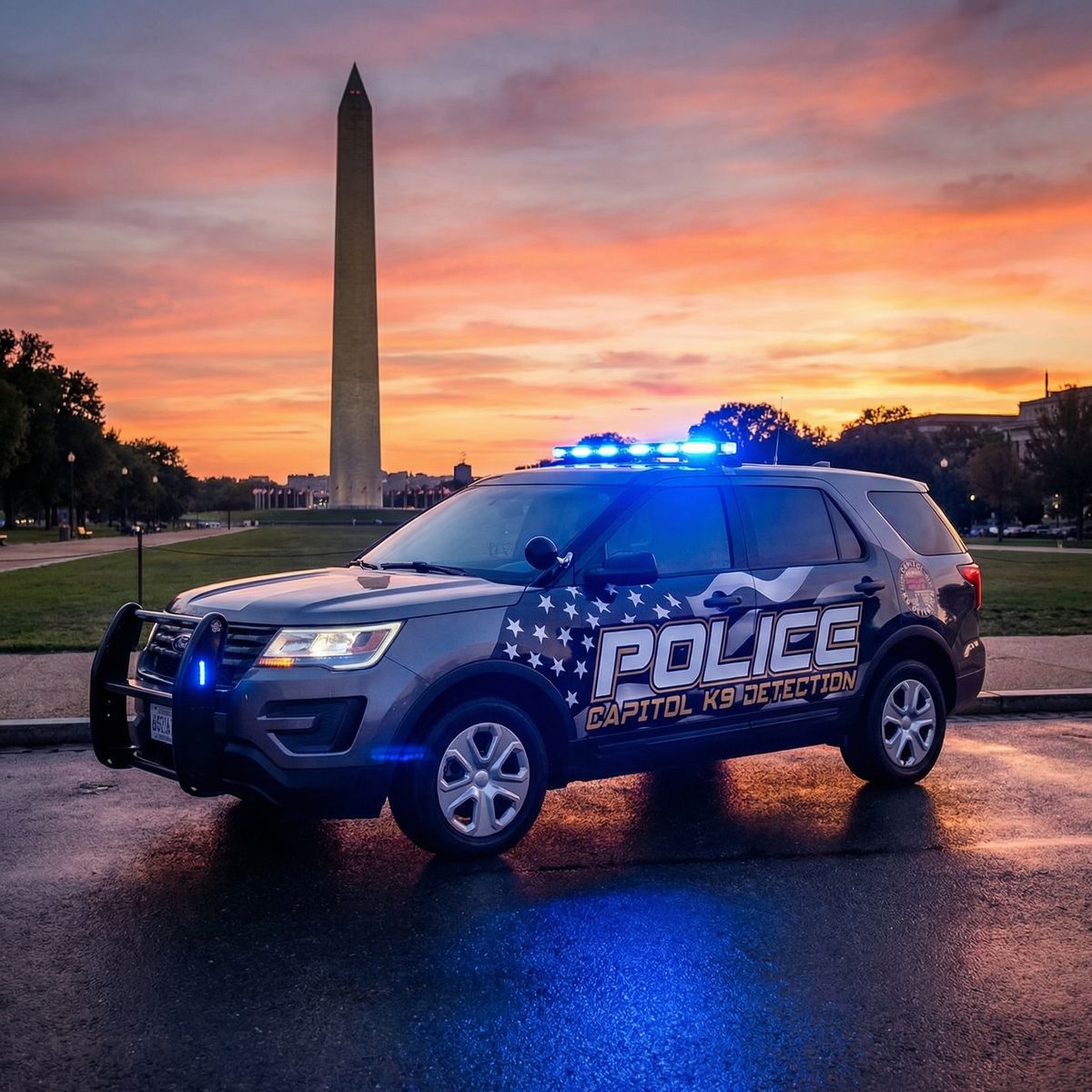
blue monument

Emergency Special Police Response Services

A credible emergency response is measured in minutes, not promises. When a threat develops at a school, medical site, office building, residential property, or public event, emergency security response services must do more than place a uniform at the door. They need to contain risk, stabilize the environment, support lawful enforcement action where authorized, and restore order without adding confusion.

That distinction matters in Washington, DC. Many environments here face a higher security burden than standard guard coverage can handle. Government-adjacent facilities, executive workplaces, transportation corridors, community events, and high-traffic commercial properties often need a provider that can move from deterrence to active intervention quickly, professionally, and within a defined chain of authority.
media-1781020901328.png

What emergency security response services are meant to do

At the basic level, these services exist to answer urgent security incidents with trained personnel, clear protocols, and immediate field presence. But the real value is not just fast arrival. It is disciplined action under pressure.

An effective response team assesses the threat, secures access points, manages people movement, coordinates with site leadership, and reduces the chance that a volatile incident spreads. Depending on the environment, that may mean crowd control during a disturbance, emergency support after a breach, protective coverage for an executive facing a credible threat, or specialized search operations when contraband, firearms, or explosives are a concern.

The strongest providers are built for layered response. They do not treat every emergency the same way because not every emergency carries the same legal, operational, or reputational risk. A trespasser at a private facility, a suspicious package at an event, and a targeted threat against a principal each require different staffing, different posture, and different escalation procedures.

1781020688915/image_0.jpeg

Why standard guard coverage is often not enough

A common mistake is assuming that any security presence can function as an emergency response capability. In practice, there is a major difference between routine guard services and a rapid-response security operation.

Routine coverage may be adequate for scheduled access control, front desk observation, or general patrol. It is often not enough when the incident involves aggressive behavior, contraband interdiction, executive exposure, mass attendance, or the need for immediate perimeter control. In those moments, decision-makers need officers and specialists who are trained to manage evolving conditions rather than simply report them.

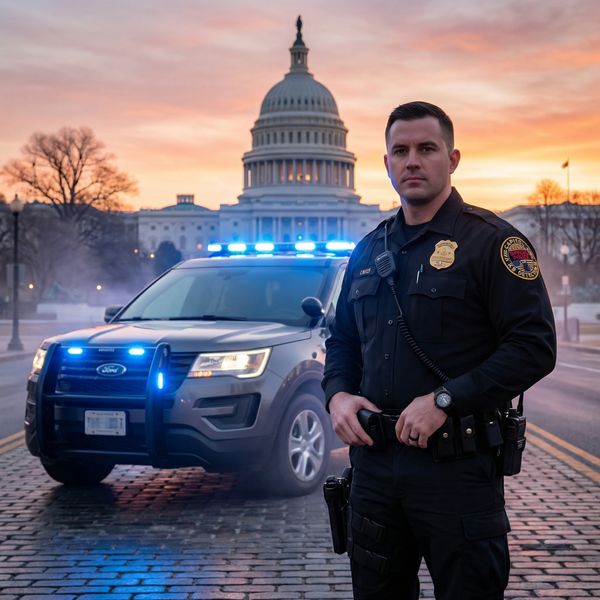
This is where authority, readiness, and specialization become decisive. In DC, providers with commissioned Special Police capabilities, such as Capitol K9 Detection, bring a different level of operational value than unarmed or lightly trained guard staff. They can create a stronger deterrent effect, support enforcement-oriented postures where appropriate, and respond with greater command presence in settings where basic observation is not sufficient.

That does not mean every client needs the highest level of force posture at all times. It means the provider should be able to scale appropriately. Some sites need visible enforcement authority. Others need discreet support with advanced detection. The right response model depends on threat profile, occupancy, public exposure, and compliance requirements.

media-1781021288014.jpeg

Emergency security response services in real operating environments

Security emergencies rarely arrive in neat categories. They begin as uncertainty, then escalate fast. A school administrator notices signs of contraband activity. An office receives a threat call before a public-facing meeting. An event organizer sees crowd behavior shift from energetic to unstable. A residential community experiences repeated unauthorized access and wants immediate saturation coverage before the issue grows.

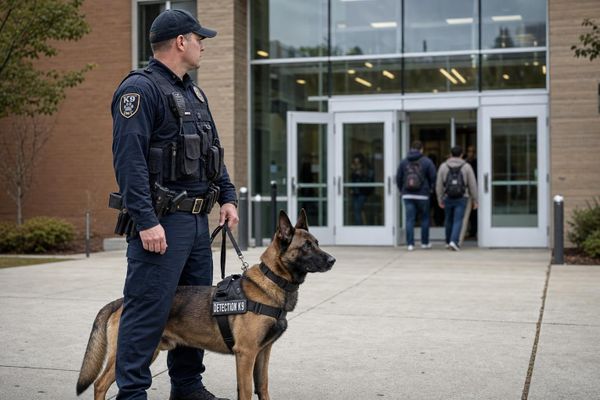
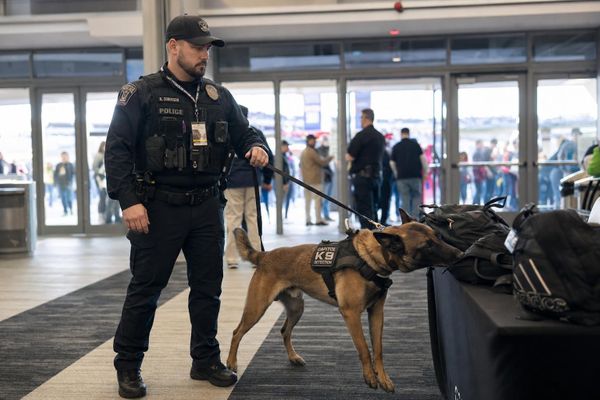
In each case, the response must be practical and site-specific. Schools may need perimeter control, internal visibility, and K9 screening support. Corporate offices may need lobby lockdown, executive movement protection, and coordination with building management. Medical facilities may need calm but firm response that protects staff access while preserving a safe environment for patients and visitors. Events may need rapid reinforcement at entry points, bag screening support, crowd movement control, and targeted searches.

This is why a one-size-fits-all security contract usually breaks down under pressure. Emergency response works best when the team already understands the site, the chain of command, the likely vulnerabilities, and the client's thresholds for escalation.

media-1781021643772.jpeg

The role of K9 units in emergency response

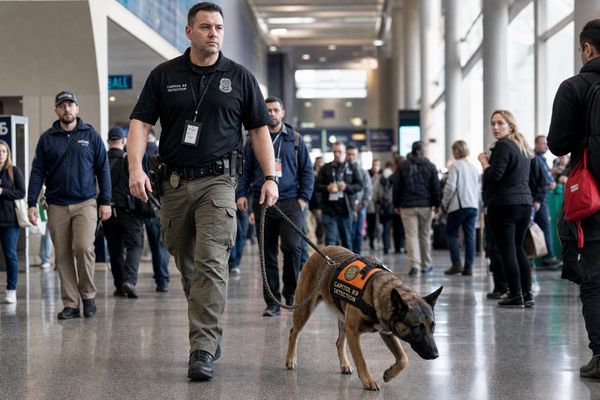
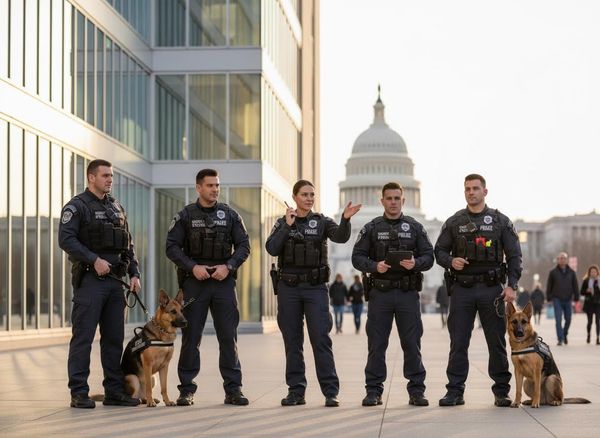
K9 support can change the speed and quality of a response when the concern involves detection, search efficiency, or deterrence. In an emergency, time matters. A trained detection dog can help clear an area, identify suspicious concerns faster, and support a more focused security posture than manpower alone.

That is especially relevant when the issue may involve narcotics, firearms, explosives, or hidden contraband. A K9 unit is not a visual accessory. It is a specialized operational asset. In a crowded venue or large facility, K9 deployment can improve screening coverage and reduce the delays that come from broad, manual search methods.

There is also a deterrent effect. People tend to change behavior when they see a capable detection or patrol team on site. That matters during high-risk events, school operations, transportation-related environments, and residential or commercial properties where repeated incidents have eroded confidence.

For some clients, a K9-supported response is the difference between a reactive security posture and a controlled one. It allows the response team to move with more precision, especially when facts are limited and the environment cannot simply be shut down.

k9-officer-detection.jpeg

What decision-makers should look for in a provider

Not every company offering urgent coverage is built for emergency operations. Buyers should look past staffing claims and ask harder questions about authority, readiness, and deployment discipline.

Training is the first filter. Response officers should be prepared for active incidents, crowd issues, access control failures, executive movement, emergency site stabilization, and coordination with public safety partners when needed. If a provider cannot explain how it handles escalation, communication, perimeter management, and post-incident continuity, that is a warning sign.

Legal authority also matters. In sensitive DC environments, there is a significant difference between a vendor providing a basic watch presence and one operating with commissioned Special Police capabilities. That distinction affects deterrence, site control, and the ability to respond credibly in moments where visible authority is part of restoring order.

Specialization is the next factor. Emergency response may require patrol officers, executive protection personnel, crowd control teams, or K9 detection units. A provider with integrated capabilities can adapt without forcing the client to coordinate multiple vendors in the middle of a problem.

Finally, discretion should not be overlooked. A hospital, school, executive office, or dignitary detail may need forceful security readiness without unnecessary disruption. Professional response is not about theatrics. It is about command presence, communication discipline, and appropriate action.

1780934082074/image_0.jpeg

Planning before the emergency happens

The best emergency response contracts are built before the emergency. That sounds obvious, but many organizations wait until after an incident to define roles, access points, communication channels, and response expectations.

Pre-incident planning gives security teams the ability to act with speed and confidence. Site walks, threat assessments, access mapping, staffing models, and contingency protocols all make a measurable difference once pressure hits. Response times improve because the team already knows the terrain. Escalation becomes cleaner because leadership contacts and reporting lines are already established.

This planning stage is also where clients decide what kind of presence they want. Some prefer a highly visible deterrent posture. Others need lower-profile coverage that can expand quickly if conditions change. Neither is automatically better. The right answer depends on the environment, the people being protected, and the likely threats.

In the DC metro area, many clients need both flexibility and authority. A trusted leader in this space should be able to provide immediate protective presence while also supporting longer-term stabilization if an incident creates ongoing risk. Capitol K9 Detection is built for that kind of mission-focused deployment, combining Special Police authority with specialized K9 and protective capabilities for clients who cannot rely on ordinary coverage.

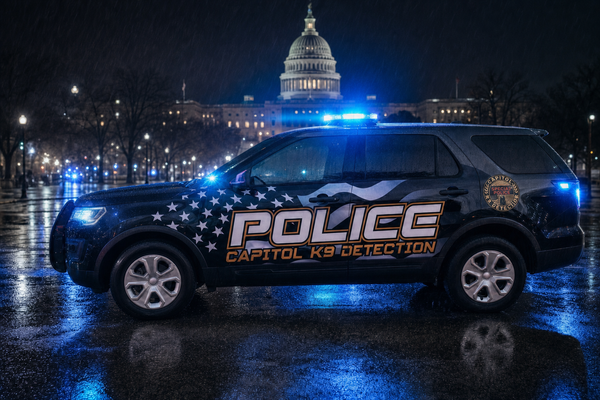
blue dusk

When emergency response becomes part of long-term protection

Some incidents are isolated. Others reveal a pattern. After a breach, threat report, contraband discovery, or public disruption, organizations often realize they do not have a temporary problem. They have an exposure problem.

That is where emergency security response services become part of a broader protection strategy. A short-notice deployment can transition into scheduled patrol, access control reinforcement, executive protection, event security, or recurring K9 screening. This continuity matters because security gaps often reopen as soon as the initial urgency fades.

The right provider helps clients move from immediate control to sustained prevention. That may involve stronger post orders, revised entry procedures, higher visibility patrols, or periodic detection sweeps. It depends on what the incident revealed and how much risk the client is willing to carry going forward.

Serious security is not defined by how a provider looks in a proposal. It is defined by what happens when conditions turn unstable. If your site, people, or event could face a fast-moving threat, the question is simple: when pressure arrives, will your security team observe the problem, or take command of it? That answer shapes safety, liability, and confidence long after the incident ends.