Screenshot 2026-06-04 052525.png

Firearm Detection Dog Services in DC

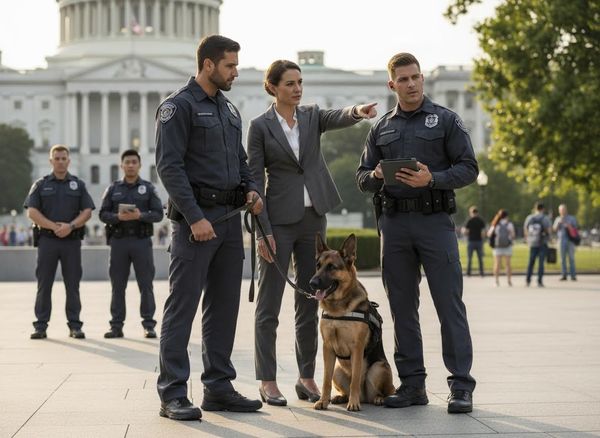
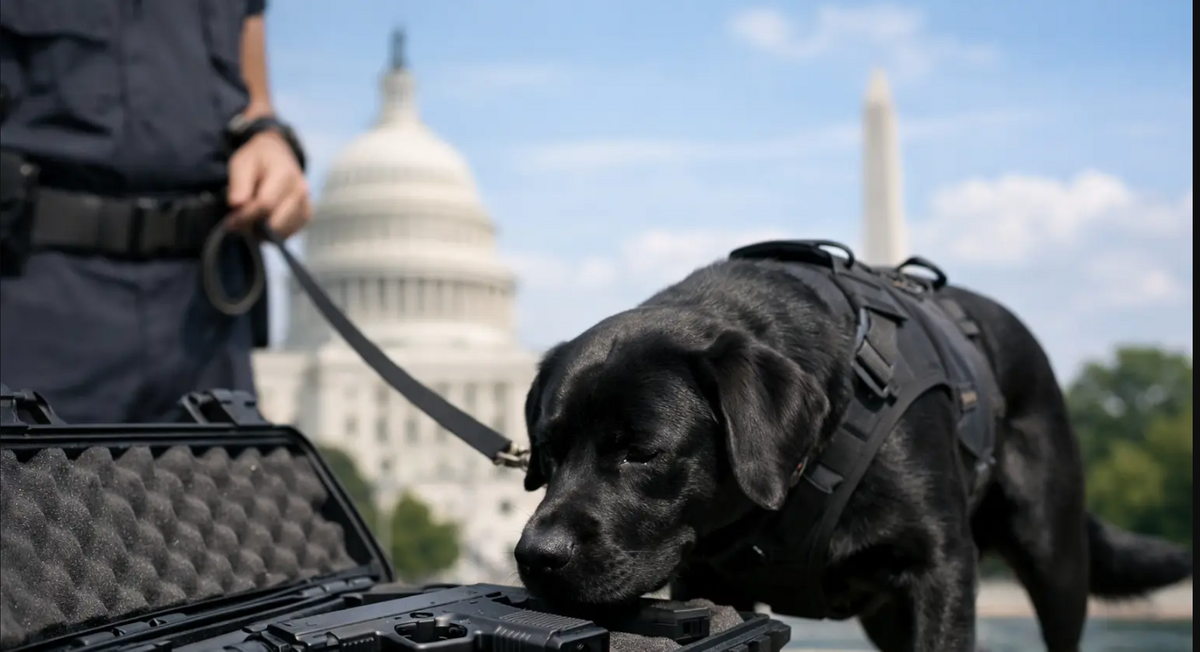
A bag check can slow a line. A metal detector can create a bottleneck. And neither tells you much about what may be moving through a parking area, staging zone, loading dock, or crowded entrance before a problem reaches your front door. That is where firearm detection dog services add real operational value. For schools, medical facilities, office properties, event venues, and public-facing institutions in the Washington, DC area, trained K9 teams provide a fast, visible, and highly adaptable layer of threat detection.

These services are not a replacement for every other security measure. They are a force multiplier. When properly deployed, a firearm detection dog team helps identify potential weapon-related threats early, supports access control, strengthens deterrence, and gives decision-makers more options before an incident escalates.

1780932648348/image_0.jpeg

What firearm detection dog services actually do

Firearm detection dogs are trained to detect the odor associated with firearms and related components. In practical terms, that allows a handler and K9 team to screen people, packages, vehicles, rooms, common areas, queues, and event perimeters without relying only on fixed equipment. The result is mobility. A trained team can move where risk moves.

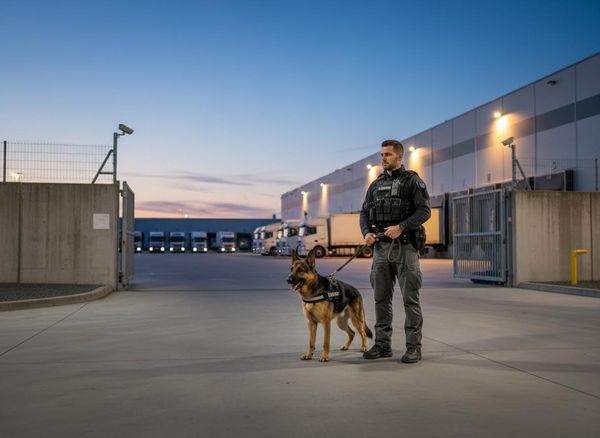
That flexibility matters in real environments. A corporate building may need periodic screening in garages, lobbies, and freight entrances. A school may need preventive sweeps before arrival, after a threat report, or ahead of a high-attendance function. An event organizer may need roaming detection support across parking, backstage, VIP access points, and crowd-entry routes. The mission changes by site, but the purpose stays the same - identify risk sooner and support a controlled response.

Unlike static screening tools, K9 deployments can be tailored to the pace and profile of the location. Some clients need a highly visible deterrent presence. Others need discreet screening that does not disrupt operations or alarm visitors. Both approaches have value, and the right choice depends on the environment, the threat picture, and the client’s tolerance for friction at entry points.

1780932687033/image_0.jpeg

Where firearm detection dog services fit best

Not every site has the same exposure. A law office and a stadium face very different operational realities. Effective security planning starts by matching the detection asset to the site’s actual vulnerabilities.

1780932713776/image_0.jpeg

Schools and academic campuses

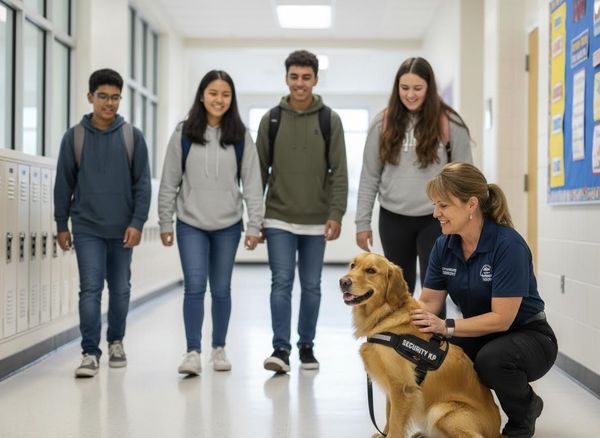
Educational settings often need security that is proactive without feeling punitive. Firearm detection dog services can support school administrators with building sweeps, parking lot screening, athletic event coverage, and response support after a reported threat. The presence of a trained K9 team can also strengthen confidence among staff, parents, and visitors when handled professionally and with clear protocols.

That said, school deployments require careful communication. Administrators must balance deterrence, student experience, privacy expectations, and emergency planning. A qualified provider understands that the assignment is not just to search - it is to support a safe learning environment with discipline and restraint.

1780932738540/image_0.jpeg

Corporate offices and commercial properties

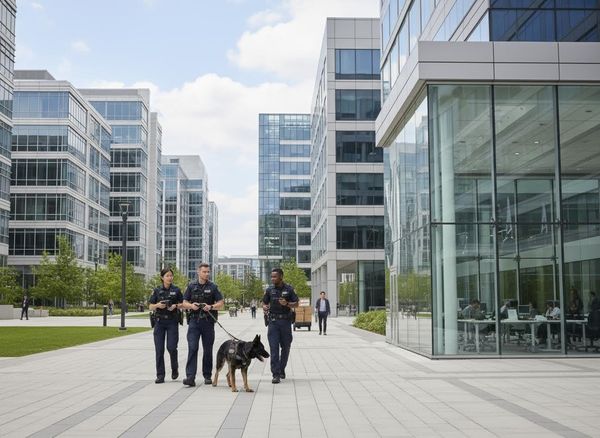
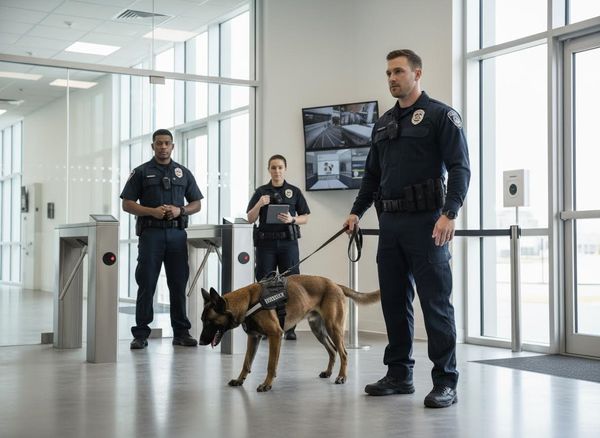
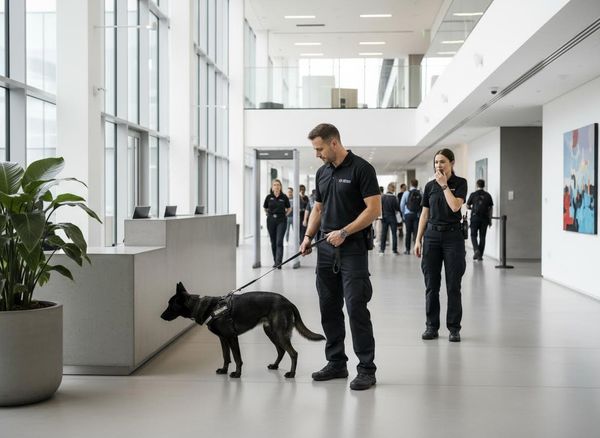
Office buildings, mixed-use developments, and headquarters facilities often manage a steady flow of staff, vendors, guests, and deliveries. Firearm detection teams can be used for routine screening, executive arrival support, threat-driven sweeps, or special events that increase exposure. They are especially useful in large properties where security teams need coverage beyond the lobby checkpoint.

For property managers and corporate security directors, the advantage is not only detection. It is mobility, unpredictability, and faster coverage across multiple zones. A visible K9 team also changes behavior. That deterrent effect is difficult to measure precisely, but experienced security professionals know it matters.

1780932763967/image_0.jpeg

Events, venues, and public gatherings

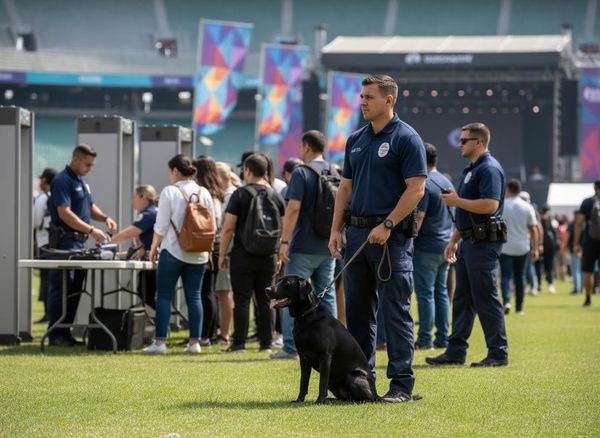
Large gatherings create compressed risk. People arrive at once, access points become congested, and security teams have limited time to make decisions. Firearm detection dog services can support outer-perimeter screening, line management, VIP protection, and random or directed searches in high-traffic zones.

The trade-off is that events require coordination. K9 screening works best when it is integrated with entry policies, bag checks, credentialing, and response procedures. A dog team without a clear command structure is underused. A dog team inside a coordinated plan becomes a strong preventive asset.

1780932890337/image_0.jpeg

Residential communities, medical facilities, and sensitive sites

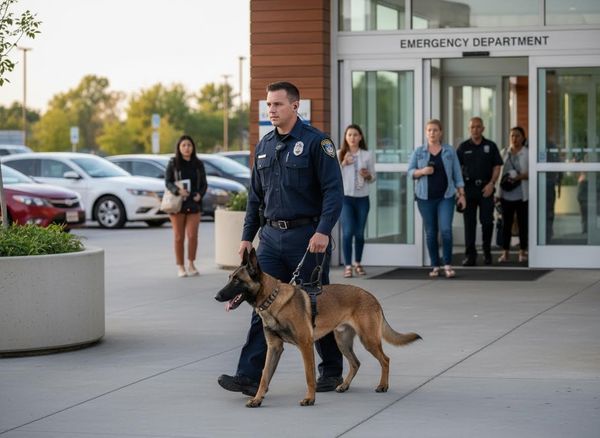
Some sites need a lower-profile posture but still require elevated vigilance. Residential buildings may need screening after a tenant threat, domestic incident, or community concern. Medical facilities may need firearm detection support in emergency departments, parking areas, or public entrances where emotions run high and disruptions can become dangerous quickly. Sensitive sites benefit from teams that can operate with control, discretion, and minimal disruption.

1780932936295/image_0.jpeg

Why trained K9 teams matter more than the dog alone

Clients sometimes focus on the dog, but the team is the real capability. Detection performance depends on training standards, handler skill, ongoing certification, environmental conditioning, and operational discipline. A firearm detection dog is only as effective as the handler’s ability to read behavior, interpret alerts, maintain control, and communicate quickly with security leadership.

This is where service quality separates itself. A professional team does not improvise on site. It works under defined search patterns, clear reporting procedures, and established escalation protocols. It understands chain of command. It knows when a screening operation should remain discreet and when a visible intervention is the better deterrent choice.

For clients in Washington, DC, that distinction can be even more important. Some assignments call for more than observation and notification. They may require coordination with on-site security leadership, emergency response procedures, or personnel operating with formal authority. In those settings, a provider that can integrate specialized K9 detection with broader protective services offers a stronger operational posture than a standalone vendor with narrow scope.

Homepage V3 (1).jpg

What to look for in a firearm detection provider

The first question is not price. It is capability. Decision-makers should ask how the dogs are trained, how often teams certify, what environments they are conditioned for, and how deployments are documented. A credible provider should be able to explain its procedures clearly and without exaggeration.

The second question is operational fit. A school, hospital, and private event do not need the same presence. The provider should be able to recommend a deployment model that fits the site, schedule, and threat profile rather than pushing a one-size-fits-all package.

The third question is command structure. Who makes decisions on site? How are alerts handled? What happens if a search leads to a credible concern? Strong providers answer these questions in advance, because confusion during a live security event is its own risk.

The fourth question is discretion. In some environments, visible enforcement presence is the right signal. In others, a calmer posture is more effective. Experienced teams know how to work both ways without losing readiness.

1780932970619/image_0.jpeg

Firearm detection dog services and layered security

No serious security professional treats one asset as a complete answer. Firearm detection dogs work best inside a layered plan that may also include trained officers, access control, cameras, visitor management, emergency communications, and protective personnel.

That layered approach is what turns detection into prevention. If a K9 team alerts, there must be a plan for verification, containment, communication, and response. If the team clears an area, that information still matters because it helps leadership make decisions with more confidence and less delay.

In many cases, the biggest benefit is not dramatic intervention. It is reduced uncertainty. Clients know that key areas were screened by trained professionals. Staff know there is an active detection measure in place. Visitors see a serious security posture. That combination supports both safety and confidence.

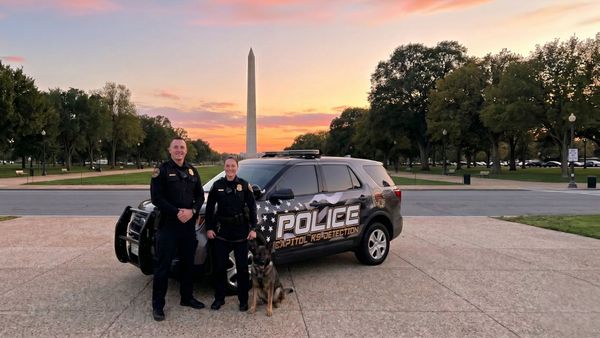
For organizations that need more than basic guard coverage, this is where an integrated model stands out. Capitol K9 Detection, for example, operates in a way that combines specialized K9 deployments with broader security and protective capabilities, giving clients a more complete response framework when assignments call for both detection and command presence.

1780933050037/image_0.jpeg

When the service makes the most sense

The strongest use case is not always a permanent daily post. Sometimes firearm detection dog services are most effective during high-risk periods - after a threat, before a major event, during a personnel issue, around executive movement, or at facilities with changing public exposure. In other cases, regular scheduled sweeps are the right choice because they create a pattern of vigilance without the rigidity of fixed equipment.

It depends on risk tolerance, budget, site layout, and how much friction an organization can accept in its daily flow. The right provider will acknowledge that. Good security planning is not about using the maximum level of force everywhere. It is about placing the right capability at the right point of risk.

For DC-area organizations, that means thinking beyond whether a dog can detect a firearm. The better question is whether the team can operate professionally in your environment, support your command structure, and strengthen your overall protection posture without disrupting the mission you are there to carry out.

A well-deployed K9 team sends a clear message before a word is spoken: this site is alert, prepared, and not waiting to react late.