k9-officer-detection.jpeg

School Contraband Detection That Works

A backpack check after a rumor spreads is not a security plan. By the time administrators are reacting to suspicion in the hallway, the school has already lost control of the moment. Effective school contraband detection is built to identify risk early, reduce disruption, and give school leaders a lawful, practical way to keep students and staff safe.

For school administrators, security directors, and district decision-makers, the issue is not whether contraband exists. The issue is how to detect it without turning the campus into a constant enforcement scene. That requires a measured approach - visible enough to deter, disciplined enough to stand up to scrutiny, and flexible enough to fit the age group, campus layout, and threat profile of the school.
1780933835084/image_0.jpeg

What school contraband detection actually covers

In a school environment, contraband can mean far more than narcotics. It may include firearms, ammunition, knives, vaping devices, alcohol, prescription medication held without authorization, or other prohibited items defined by school policy and local law. What matters operationally is not just the category of item, but the risk attached to it.

That distinction matters because different threats require different detection methods. A campus concerned about student vaping in restrooms needs a different screening posture than a school managing threats of weapons possession, after-hours trespassing, or event-related security concerns. School contraband detection works best when it is matched to the actual exposure, not treated as a one-size-fits-all program.

IMG_8175.JPG

Why schools need a proactive detection posture

Most schools do not struggle because they lack rules. They struggle because rules alone do not create deterrence. Students, visitors, and even outside actors quickly learn whether a campus enforces its policies consistently. If detection is rare, predictable, or entirely reactive, the school becomes easier to test.

A proactive posture changes that calculation. Randomized screening, trained detection teams, controlled entry points, and clear response procedures introduce uncertainty for anyone considering bringing prohibited items onto campus. That alone can reduce incidents. More importantly, it allows school leadership to act before a disciplinary problem becomes a medical emergency or a violence event.

The strongest programs also protect the broader school climate. When detection efforts are structured and professional, staff are not left improvising during a serious situation. Parents see that prevention is being treated seriously. Students understand that safety measures are real, not performative.

media-1781021288014.jpeg

The role of K9 teams in school contraband detection

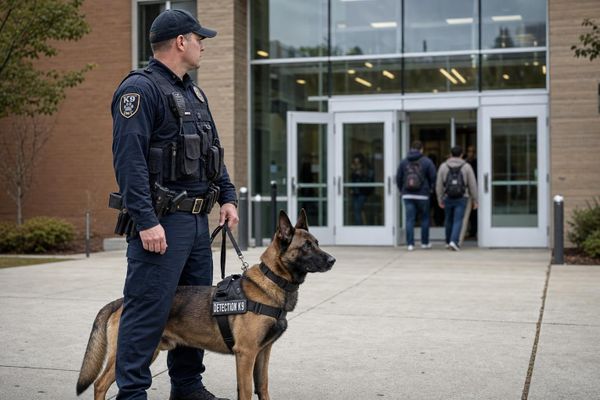
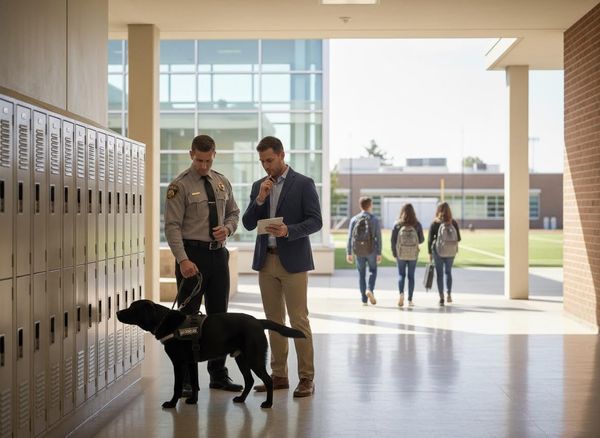
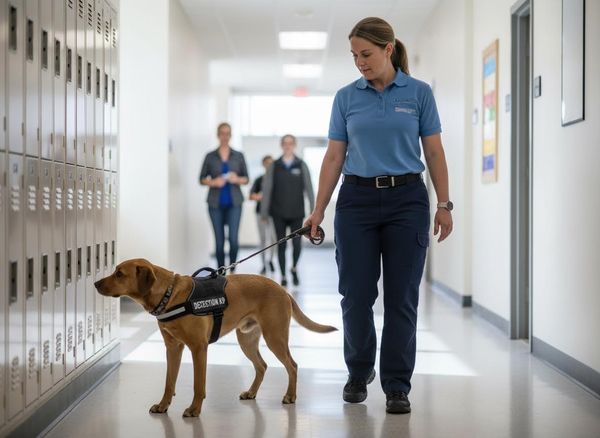
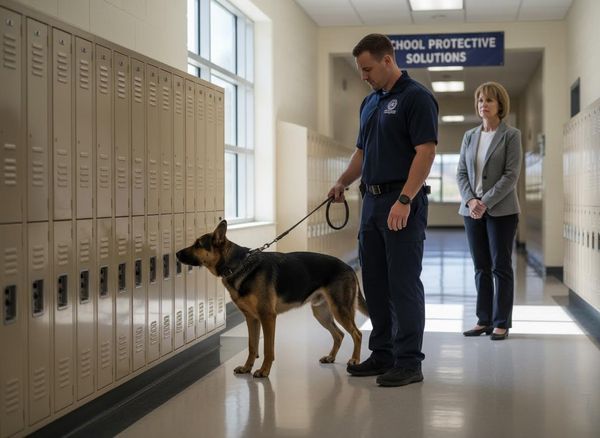
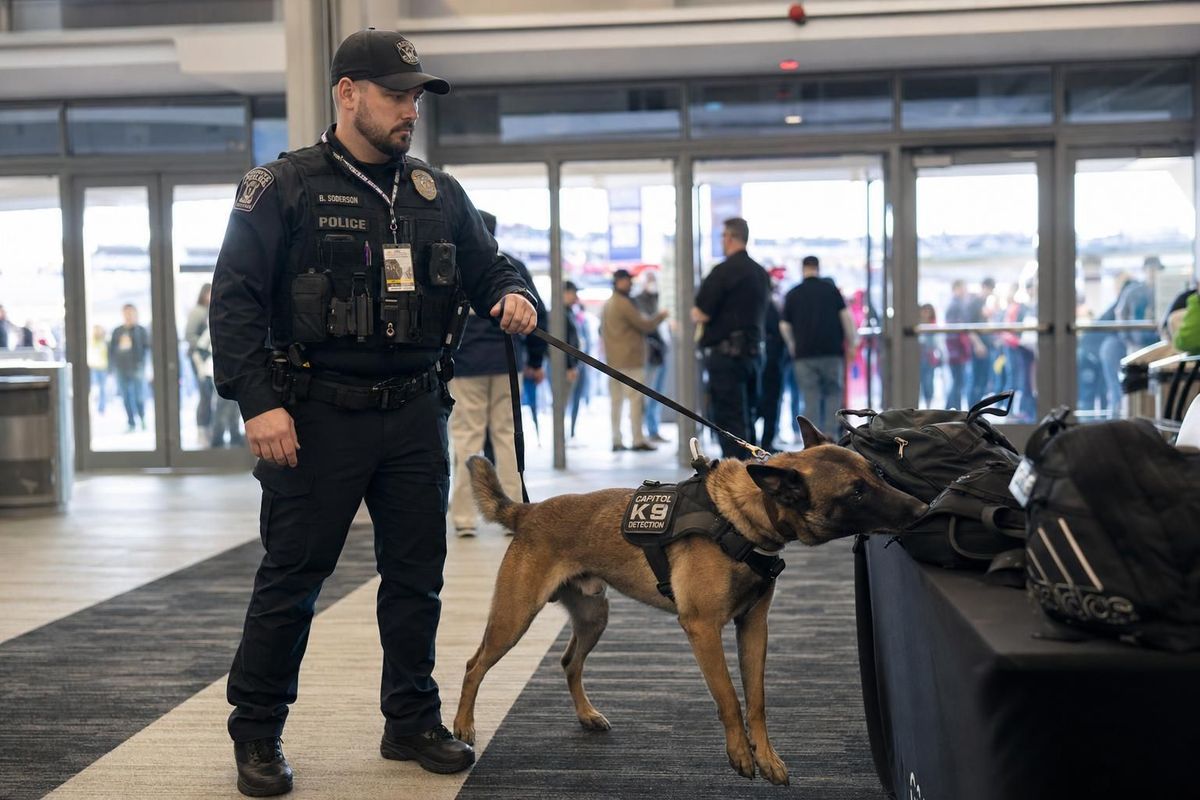
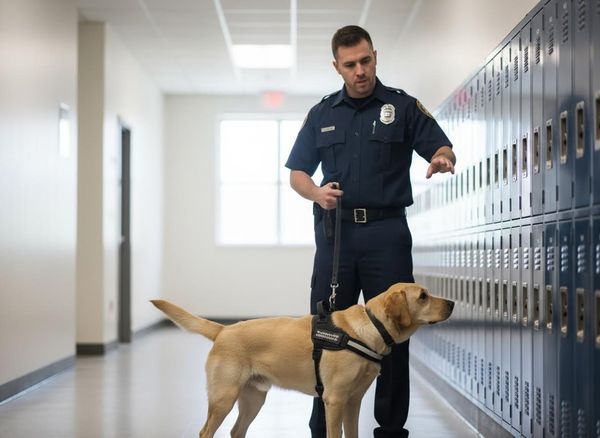
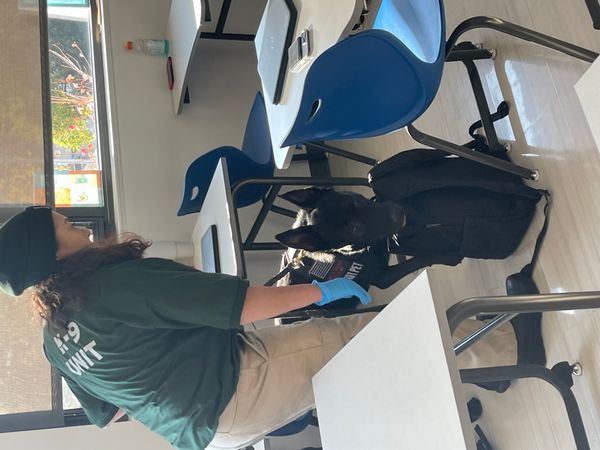
K9 detection is one of the most effective tools available when a school needs speed, discretion, and coverage across a large area. A properly trained detection dog can screen lockers, common areas, parking lots, storage spaces, and other target zones far more efficiently than manual searches alone.

That does not mean K9s replace policy, administration, or lawfully authorized enforcement. They are a force multiplier. In practical terms, a K9 team can help narrow the focus of an investigation, support random deterrence operations, and identify areas that require a closer look by school officials or authorized personnel.

There is also a visibility factor. A professional K9 presence sends a clear message that the campus takes interdiction seriously. Used correctly, that visibility can deter misconduct without causing unnecessary alarm. Used poorly, it can create tension or confusion. The difference comes down to deployment planning, handler professionalism, and clear coordination with school leadership.

1781634025504/image_0.jpeg

What effective deployment looks like

A credible program starts with an assessment. The school needs to identify where contraband is most likely to enter, where it is most likely to be concealed, and when risk is highest. For one campus, the pressure point may be morning arrival. For another, it may be athletic events, dismissal, or unsupervised transitions between buildings.

Once those patterns are understood, detection measures can be placed where they will have the most value. That may mean periodic K9 sweeps of parking areas and lockers. It may mean targeted screening during dances, games, or high-attendance events. In some schools, the best result comes from combining routine visibility with occasional unannounced operations so the environment remains difficult to predict.

This is where trade-offs matter. Constant intensive screening can strain school culture and operations. Minimal screening can leave obvious gaps. The right balance depends on the school’s age group, incident history, physical footprint, and tolerance for visible security measures.

smith-barren-roscoe (1).jpeg

Policy, authority, and response must be aligned

Detection is only one part of the operation. If a prohibited item is identified, the school must know exactly what happens next. Without that clarity, even a successful detection can create delay, legal confusion, or unnecessary escalation.

Schools should have defined protocols covering notification, isolation of the area or item, involvement of administrators, parent communication, and the threshold for law enforcement or authorized security response. Those decisions should not be made in real time while staff are under pressure. They should be established in advance and practiced.

This is particularly important in sensitive environments where private security, school administration, and public law enforcement may each have separate responsibilities. Authority must be clear. Documentation must be consistent. The goal is controlled intervention, not chaos around a discovery.

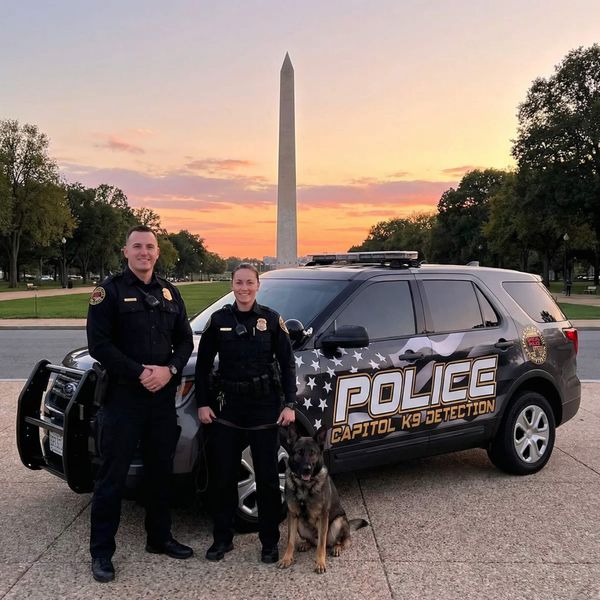
For schools in higher-risk environments, providers that understand both detection operations and Special Police can close a major gap. Capitol K9 Detection operates in a space where deterrence, screening, and authorized protective presence can be coordinated as part of one security posture.

1781634094050/image_0.jpeg

School contraband detection and the student environment

Schools have to protect safety without creating an atmosphere that feels adversarial every day. That is a real concern, and it should be taken seriously. The answer is not to avoid detection. The answer is to apply it with discipline.

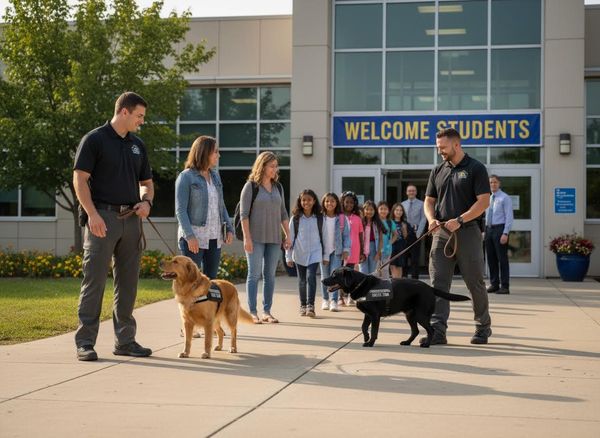
Students respond differently depending on how security is presented. Professional teams with clear boundaries and calm conduct reinforce order. Inconsistent, overly aggressive, or poorly explained operations can undermine trust even when the underlying goal is valid. That is why handler conduct, staff communication, and scheduling decisions matter almost as much as the screening technology or K9 capability itself.

Age also matters. An elementary school may require a very different posture than a high school campus with open parking, after-hours activities, and a larger volume of visitors. Schools serving older students often need stronger interdiction measures because exposure points are broader and concealment opportunities are greater. A district-wide plan that ignores those differences usually performs poorly.

1781634127287/image_0.jpeg

Common mistakes schools make

One common mistake is using detection only after an incident becomes public. That approach puts the school in a cycle of reaction. Another is relying on highly visible security measures that look strong but are easy to predict and avoid.

Schools also run into problems when they hire general security coverage and assume that translates into specialized contraband detection. It does not. Detection work requires trained dogs, trained handlers, operational planning, and a clear understanding of search limitations, evidence handling, and school-specific response protocols.

A final mistake is failing to communicate internally. Teachers, front office staff, school resource personnel, and administrators do not need every tactical detail, but they do need to know how operations will affect movement, who to contact with concerns, and what to do if a student reports possible contraband before a screening begins.

1781634321228/image_0.jpeg

Choosing a provider for school contraband detection

Schools should look beyond marketing language and ask operational questions. What type of contraband is the provider trained to detect? How are K9 teams certified and maintained? How are deployments documented? What experience does the team have in live school environments rather than generic commercial sites?

It is also worth asking how the provider handles discretion. A school may want a strong deterrent effect, but it also may need screening done in a way that minimizes disruption during class hours or sensitive events. That balance takes experience. So does coordinating with administrators who have to manage parents, staff, student discipline, and public scrutiny at the same time.

The best providers understand that the mission is bigger than finding prohibited items. The mission is preserving order, reducing exposure, and helping school leaders act from a position of control.

A safer campus is rarely the result of one dramatic intervention. More often, it comes from quiet consistency - trained personnel, credible detection capability, lawful response, and a visible commitment to prevention. When school contraband detection is handled with that level of readiness, it becomes more than a search function. It becomes part of the school’s protective posture, and that is where real confidence begins.

Partner with Washington D.C.'s Premier Protective Force

Securing vital infrastructure in our nation's capital demands a level of legal precision, tactical experience, and authoritative presence that standard private security firms simply cannot replicate. We invite you to explore our comprehensive protective options and contact us today to learn how our specialized teams can reinforce your operational safety protocols.