
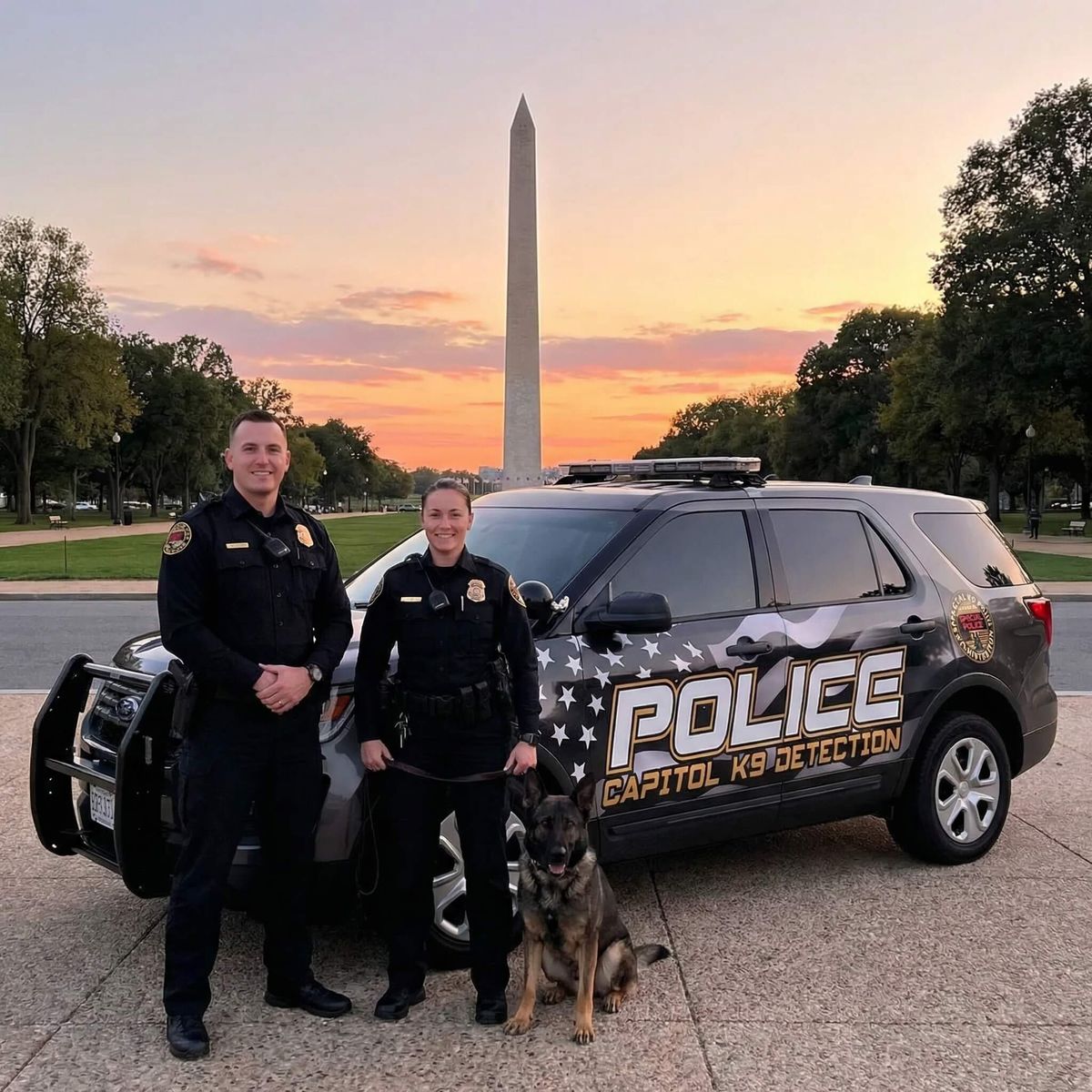
What Is a Washington DC Special Police Officer?
A Washington DC Special Police Officer is a privately employed officer who receives a commission from the District of Columbia to perform specific protective and enforcement functions on designated property or within an assigned scope of duty. The role sits between traditional private security and public law enforcement.
That distinction is important. A basic security officer is generally hired to observe, deter, document, and report. A commissioned SPO may have authority to make arrests or detain individuals under the terms of the commission and applicable DC law, depending on assignment, training, and licensing. In practical terms, that means an SPO can provide a stronger enforcement posture than a standard unarmed or armed guard service.
For property managers, school administrators, healthcare operators, event planners, and executive protection clients, that difference is not technical. It changes what happens when someone refuses to leave, attempts unauthorized entry, becomes disorderly, or creates a credible safety threat.
How an SPO Differs From a Standard Security Guard
The simplest way to understand the role is to compare authority, not uniforms.
A standard security guard is usually limited to prevention, monitoring, access screening, incident reporting, and contacting law enforcement when needed. That model works in many low-risk environments. But in a location with repeat trespass issues, heightened security expectations, sensitive assets, or large public traffic, observation alone may not be enough.
A Washington DC Special Police Officer is brought in when the client needs a higher level of control. That can include maintaining order on private property, supporting removals, responding more decisively to incidents, and presenting a credible command presence that reduces escalation before it starts.
That said, an SPO is not the same as a Metropolitan Police Department officer. A Special Police commission does not make someone a general public police officer with unlimited citywide authority. The role is defined by law, commission terms, jurisdiction, and assignment. Serious criminal matters still require coordination with public law enforcement. The value of an SPO is not that they replace police. It is that they close the gap between passive guarding and waiting for outside response.
Why Organizations Use Washington DC Special Police Officers
Most clients do not seek commissioned coverage because they want a stronger image. They do it because their exposure requires more than a passive security posture.
A corporate facility may need a visible enforcement presence in its lobby and parking areas after repeated access violations. A residential community may need officers who can address trespass and disorder issues with more authority. A hospital or medical site may need control in emotionally charged situations where delay creates risk. A school, transit-related venue, or special event may need a disciplined presence that can manage crowds, protect restricted areas, and act quickly when a person becomes disruptive.
In each case, the question is less about optics and more about operational capacity. If the site has a pattern of incidents, public-facing risk, or a higher standard of safety expectations, a Special Police deployment can be a more appropriate fit.
Authority, Jurisdiction, and Limits
This is where many misunderstandings happen.
Special Police Officers in DC operate under a commission issued by the District, but their authority is not unlimited. It generally applies within the property, assignment, or scope authorized by the commission. Their powers, equipment, and duties also depend on licensing, training, and contract requirements.
That means the answer to what an SPO can do is often: it depends.
It depends on whether the officer is armed or unarmed. It depends on the nature of the property. It depends on the terms of the commission. It depends on whether the assignment includes patrol, access enforcement, executive protection support, or specialized operations.
Clients should be cautious about providers who speak in vague or inflated terms. A professional security partner should explain exactly what authority its officers have, where that authority applies, what training supports it, and how incidents are escalated. Precision matters in this space because legal exposure and safety outcomes are closely tied.
What a Washington DC Special Police Officer Actually Does on Site
The day-to-day work of an SPO is usually more disciplined and proactive than many people expect.
On a typical assignment, the officer may control access points, verify credentials, patrol grounds, monitor for suspicious behavior, respond to disturbances, document incidents, enforce site rules, and coordinate with emergency responders. In higher-security environments, that may expand to screening support, perimeter control, post orders for sensitive areas, and response readiness during elevated threat periods.
The best SPO deployments are not reactive. They are built around prevention. A strong officer presence changes behavior before a problem develops. Visitors follow instructions more readily. Unauthorized persons are challenged sooner. Staff and tenants feel supported. Escalation is less likely when command presence is visible from the start.
That preventive value is one reason many organizations prefer commissioned officers over lower-authority guard models in demanding settings.
When K9 Support Changes the Security Equation
Some environments need more than personnel authority. They need detection capability.
That is where a provider that combines commissioned Special Police services with trained K9 teams offers a different level of protection. An SPO team supported by narcotics, explosives, firearms, or contraband detection dogs can address both enforcement presence and threat identification in one coordinated deployment.
For schools, transportation-adjacent sites, public venues, private events, and facilities with heightened screening requirements, that combination can be especially effective. The officer provides control, legal authority, and immediate response capacity. The K9 adds specialized detection that human observation alone cannot match. Together, they create a stronger deterrent and a more credible protective posture.
This integrated model is particularly useful when a client wants one provider to handle access control, patrol, interdiction support, and rapid incident response without dividing responsibility across multiple vendors.
Is an SPO Right for Every Property?
No, and that is part of making the right decision.
If your site has minimal public traffic, low incident history, and limited enforcement needs, a traditional security officer may be sufficient. In those cases, paying for commissioned coverage may not add enough value to justify the cost.
But if your property faces recurring trespass, workplace tensions, public interaction challenges, executive risk, compliance pressure, or reputational sensitivity, the calculation changes. The cost of under-securing a site can be much higher than the difference in contract pricing. Delayed response, weak deterrence, tenant dissatisfaction, safety complaints, and preventable incidents all carry operational consequences.
The better question is not whether an SPO sounds more impressive. It is whether your environment requires a provider with formal authority, stronger incident control, and a more disciplined response framework.
What to Ask Before Hiring an SPO Provider
Not every security company is built to deliver commissioned services at a high standard. Before selecting a provider, decision-makers should look closely at legal compliance, officer credentials, supervision, reporting quality, and operational readiness.
Ask how officers are commissioned and trained. Ask what authority applies to your site. Ask how incidents are documented and escalated. Ask whether the company can support emergency response, executive protection, crowd management, or K9 detection if your needs expand. Ask who supervises the post and how quickly leadership responds when conditions change.
A capable provider should answer clearly and without exaggeration. If the environment is sensitive, the security plan should be equally precise.
In the DC market, that level of clarity matters. Clients are not just buying staffing. They are selecting a protection posture.
The Real Value of a Washington DC Special Police Officer
The real value of an SPO is not found in the title alone. It is found in what that commission allows a trained professional to do when conditions become uncertain.
For the right property or mission, a Washington DC Special Police Officer provides more than presence. The role delivers authority, order, deterrence, and a faster path to control when seconds count. When paired with disciplined procedures and, where needed, specialized K9 support, that coverage can give organizations a level of readiness that basic security services were never designed to provide.
If you are evaluating security in the District, the safest move is usually not the loudest one. It is the one that matches your real exposure with the right authority, the right training, and the right operational discipline from day one.