A security plan can look complete on paper and still leave one critical gap - the ability to detect explosives quickly, accurately, and without disrupting operations. That is where explosive detection dog services become a serious advantage. For schools, government sites, office buildings, medical facilities, transportation hubs, and special events in the Washington, DC area, the question is rarely whether security matters. The real question is whether your current posture can identify a threat before it becomes an incident.
When Explosive Detection Dog Services Matter
What explosive detection dog services actually provide
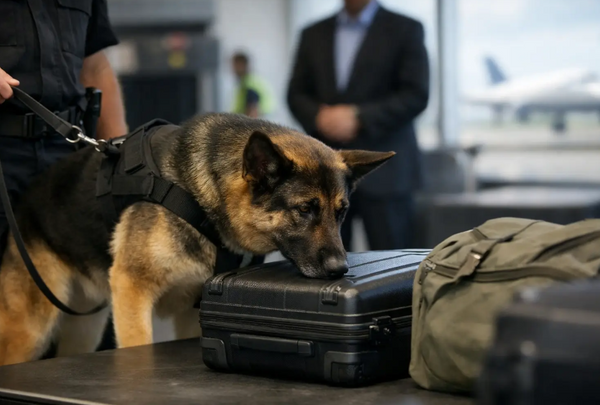
Explosive detection is not just about searching bags at a checkpoint. In practice, it is a specialized screening capability designed to identify explosive odors across people, packages, vehicles, rooms, staging areas, and public spaces. A properly trained K9 team can cover ground quickly, work in dynamic environments, and help security leaders make faster decisions when time and public safety are both on the line.
This matters because many environments cannot tolerate slow or overly intrusive screening methods. An executive venue may need discreet sweeps before an arrival. A school may need a rapid response after a threat report. A public event may need visible deterrence at entrances while maintaining steady guest flow. Explosive detection dog services fit these realities because they combine mobility, speed, and a strong psychological deterrent effect.
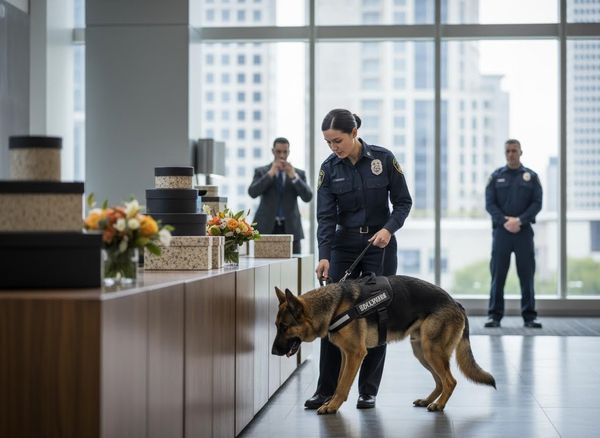
The dog is only one part of the capability. The handler, training standards, deployment protocols, and chain of command are what turn a K9 team into an operational asset. Clients should expect more than a dog on site. They should expect disciplined search patterns, clear communication, documented procedures, and coordination with broader security operations.
Why explosive detection dog services are used in high-exposure settings
High-exposure environments do not all face the same level of risk, but they often share the same challenge: a single threat can disrupt operations, endanger lives, and create lasting liability. That is why explosive detection K9 teams are often deployed in settings where the cost of being wrong is high.
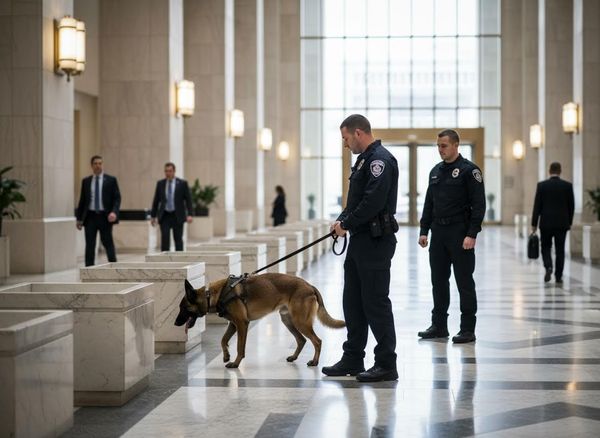
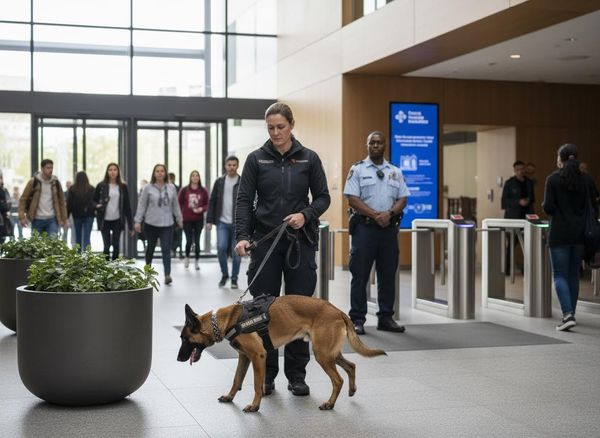
Government buildings and public-sector facilities benefit from proactive sweeps, perimeter checks, and support during elevated threat periods. Corporate offices and headquarters often use K9 screening before executive meetings, shareholder events, or sensitive visitor arrivals. Schools and universities may require precautionary searches following reported threats or as part of broader campus safety operations. Hospitals and medical centers can use K9 teams where public access is constant and continuity of care cannot be interrupted.
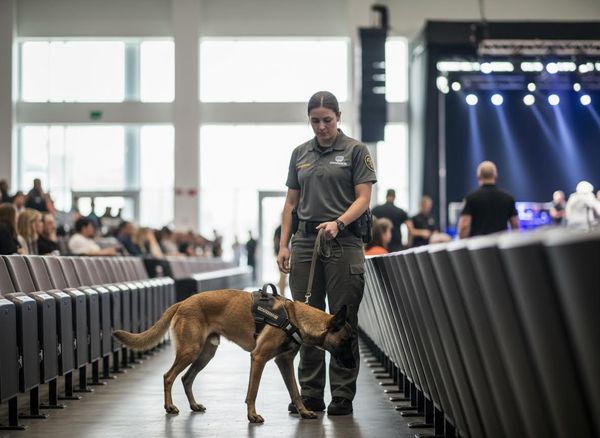
Events are another major use case. Concerts, political gatherings, private functions, and community festivals bring crowds, delivery activity, temporary infrastructure, and compressed timelines. Those conditions create openings that basic guard coverage alone may not address. K9 screening helps event operators manage access points, loading zones, backstage areas, VIP routes, and unattended item concerns with greater confidence.
In residential and mixed-use properties, the need is different but still real. Luxury properties, high-profile residences, and residential communities may require preventive sweeps, protective support during sensitive gatherings, or enhanced screening when a resident faces elevated risk. In those settings, discretion matters as much as capability.
Speed matters, but so does deployment discipline
One of the biggest strengths of a trained explosive detection dog is speed. A K9 team can search areas faster than many manual methods while maintaining a focused detection purpose. That speed is valuable, but it should never be mistaken for improvisation.
Professional deployments depend on planning. The team needs to know the site layout, the search objective, the traffic conditions, the emergency communication path, and the threshold for escalation. A rushed search without structure can create confusion, miss priority areas, or interfere with business continuity. A disciplined provider plans the sweep, controls the search environment as much as possible, and communicates findings in a way decision-makers can act on immediately.
This is especially important in occupied buildings and live events. Security measures must reduce risk without creating unnecessary panic or operational friction. The best K9 deployments are visible enough to deter, controlled enough to reassure, and precise enough to support the client’s mission.
What decision-makers should look for in a provider
Not all K9 services operate at the same level. Some are suitable for general deterrence. Others are built for high-accountability environments where training, authority, reporting, and response integration all matter. For decision-makers, the difference is not cosmetic. It affects reliability, legal exposure, and operational outcome.
A qualified provider should be able to explain training standards, certification expectations, deployment scope, and handler experience in direct terms. They should also be clear about what the team can and cannot do in your environment. That kind of transparency is a strength, not a limitation.
There is also a practical difference between hiring a standalone detection vendor and hiring a security partner that can integrate K9 screening with broader protective operations. In some cases, a client only needs a sweep before opening a facility. In other cases, the mission calls for layered support that may include access control, perimeter security, executive protection, emergency response coordination, or personnel with law-enforcement-authorized capabilities. The right answer depends on the site, the audience, the threat profile, and the consequences of disruption.
For many clients in Washington, DC, that integration is the real value. A provider that can combine detection, deterrence, and command presence offers more than a narrow service line. It offers a stronger security posture.
Common deployment scenarios and what changes between them
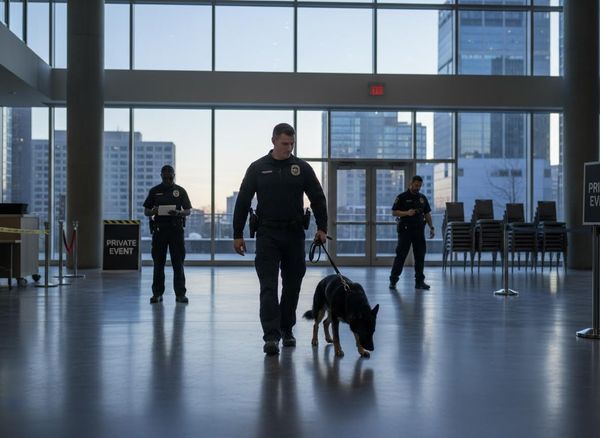
A pre-event sweep is different from an active operational presence. Before an event, the focus is usually on clearing venue spaces, back-of-house areas, delivery zones, staging sections, and routes of entry before guests arrive. The objective is speed, coverage, and a clean handoff to the rest of the security team.
During a live event, the objective shifts. Screening may continue at entrances, around VIP spaces, or in response to suspicious items or behavior. The environment is more fluid. Crowd density, noise, and schedule changes all affect how the K9 team moves and communicates.
A facility search after a threat call is different again. In that setting, pace matters, but so does control. The site may need partial evacuation, restricted movement, and close coordination with building management and responding authorities. Clear command structure is essential.
Executive and dignitary protection brings another layer. The K9 function may support route checks, vehicle screening, venue sweeps, and advance work tied to high-profile movement. In these assignments, discretion and timing are often as important as the search itself.
The trade-offs clients should understand
Explosive detection dog services are highly effective, but serious providers do not present them as a cure-all. K9 teams are one part of a broader security strategy. They improve detection capability and deterrence, but they work best when paired with site control, trained personnel, communication protocols, and informed client leadership.
There are also environmental variables. Search conditions, crowd movement, weather, access limitations, and site complexity can all influence deployment planning. That does not reduce the value of the service. It means the deployment should be built around real conditions instead of assumptions.
Clients should also think about visibility. In some environments, a visible K9 presence is a major benefit because it deters bad actors and reassures the public. In other settings, a lower-profile deployment may be preferable to avoid drawing attention. Both approaches can be valid. The right choice depends on the mission.
Why local operational knowledge matters in DC
The Washington, DC region presents its own security realities. Government facilities, diplomatic activity, political events, executive movement, public demonstrations, and dense urban venues can create elevated exposure with very little notice. That means providers must be comfortable operating in fast-changing conditions and in locations where professionalism, restraint, and command presence are expected.
A local team with real operational experience understands that screening is rarely happening in a vacuum. It may need to align with property management, event production, executive schedules, law enforcement coordination, or restricted access procedures. Providers serving this market should be prepared for both planned deployments and urgent support requests.
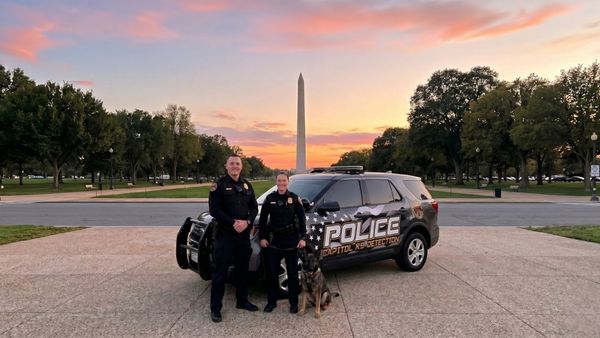
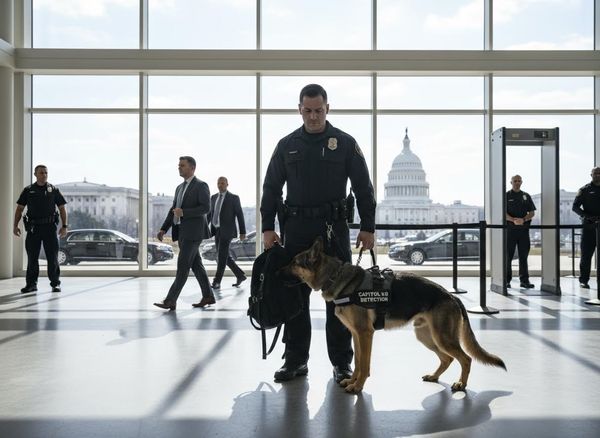
That is one reason organizations turn to Capitol K9 Detection when they need more than a basic vendor relationship. They need a mission-ready partner that understands detection work in the context of actual protective operations.
The strongest security decisions are usually made before a threat becomes visible. If your environment carries public exposure, high-profile traffic, sensitive operations, or limited tolerance for disruption, adding the right explosive detection capability is not an extra measure. It is a practical step toward control, confidence, and total peace of mind.